
Flooring for Island Park and Teton Valley Cabins That Sit Cold
Floors in an unheated cabin swing with the seasons. Here's what survives Island Park and Teton Valley winters.
- 5.0★ from 65 Google reviews
- 20+ years in East Idaho
- Free written estimates
- Dust-contained sanding
- Moisture tested before install
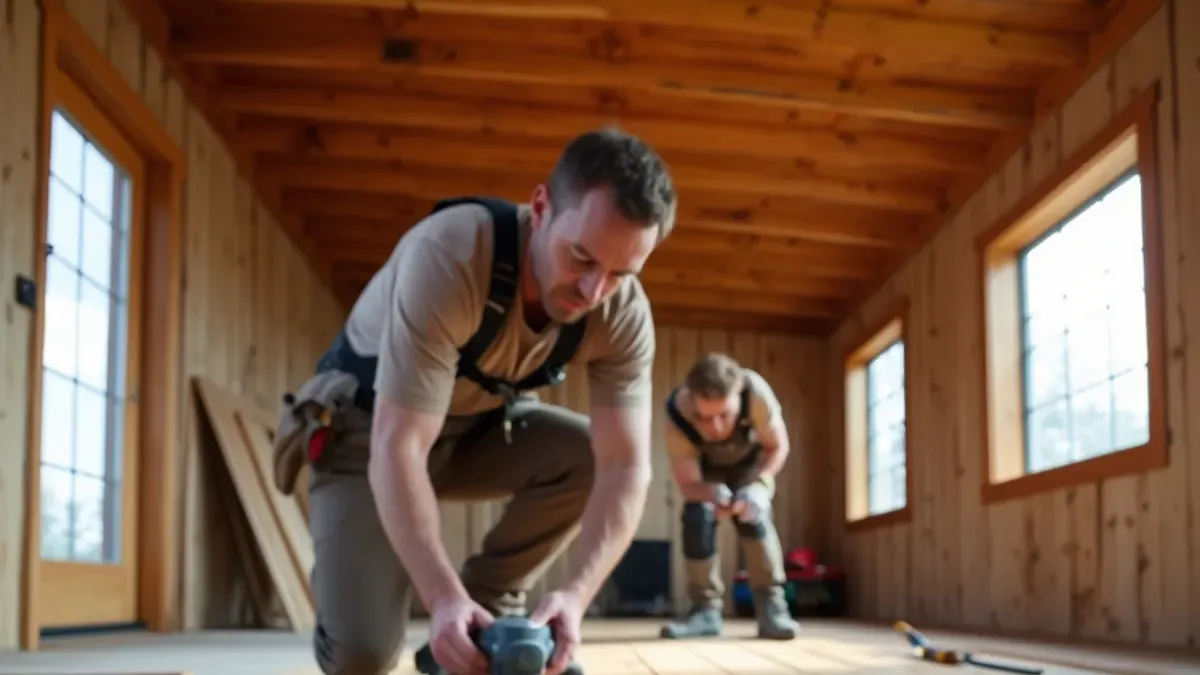
For Island Park and Teton Valley cabins that sit unheated between visits, choose flooring built for big temperature and humidity swings: engineered hardwood, rustic hickory, or luxury vinyl plank. Solid wide-plank hardwood struggles in a cabin that freezes and thaws. The right floor hides wear, tolerates movement, and handles snowmelt at the door.
What an unheated cabin does to a floor
A cabin in Island Park or Driggs lives a different life than a house in town. Nobody's running a furnace in February when you're not there. The building drops to outdoor cold, humidity climbs as snow sits against it, then it all swings back when you arrive and fire up the stove for a weekend. Then it drops again when you leave.
That freeze-thaw-freeze cycle is brutal on wood flooring. Every swing in temperature and humidity makes the boards want to shrink and swell. A floor that would sit quietly in a climate-controlled Idaho Falls home can gap, cup or buckle in a cabin that bounces between 15 degrees and 70 degrees several times a season.
Add snowmelt tracked in at the door, mud from spring runoff, and the grit that comes with mountain living, and you need a floor chosen for abuse and movement, not just looks.
Want a straight answer for your floor?
Free, written estimates across East Idaho.
Engineered hardwood: the cabin workhorse
Engineered hardwood is the floor we most often recommend for a cabin that sits cold. It's built in cross-layered plies with a real hardwood top, and that construction is far more stable than solid wood through temperature and humidity swings. The layers pull against each other, so the board resists the cupping and gapping that wreck a solid floor in an unheated building.
You still get a genuine wood surface, so the cabin feels like a cabin, not a vinyl showroom. And a quality engineered floor with a thick enough wear layer can be screened and recoated down the road, extending its life. For a mountain home near Swan Valley or in Teton Valley, that stability is worth more than the small premium over solid.
Not all engineered flooring is equal, though, and this is where it pays to spend wisely. The cheapest engineered products have a paper-thin veneer that can never be refinished and a thin core that still moves more than you'd like. A better-grade engineered floor with a thicker wood wear layer costs more but behaves better in the cold and can be recoated down the road. In a cabin you want the quality end of engineered, not the bargain end.
The one caution: engineered isn't waterproof. Standing snowmelt still needs wiping up, and entries still need mats. It tolerates the climate swings far better than solid wood, but it's wood, and water left to sit will still find the seams.
Rustic hickory and LVP: two honest alternatives
If you want solid wood in a cabin, rustic-grade hickory is the species that makes the most sense. Hickory is one of the hardest domestic woods, so it dents less under boots and dropped gear. A rustic grade, with its knots, color variation and character marks, hides scratches and seasonal movement far better than a clean, uniform floor, which shows every mark. It's the right look for a cabin anyway.
LVP is the pragmatic pick where water and cold are worst. It doesn't gap or cup with humidity because it isn't wood, and it's waterproof, so it handles entries, mudrooms and anywhere snow comes off boots. The trade-off is honest: it won't feel or sound like real wood underfoot. Many cabin owners run LVP at the entries and wet areas and real wood in the living spaces. Here's how the main options stack up.
- Engineered hickory or oak: most stable, real wood surface, recoatable, best all-round cabin choice.
- Rustic solid hickory: hardest common species, character grade hides wear, better than other solids but still moves with the seasons.
- Luxury vinyl plank (LVP): waterproof and nearly immune to humidity swings, best at entries and wet zones, trades away the feel of real wood.
- Avoid: smooth, uniform, wide solid planks in a light clean tone, which telegraph every scratch and seasonal gap.
Why solid wide-plank often fails in a cold cabin
The look a lot of people want in a cabin is a wide, solid-plank floor, and that's exactly the floor that struggles most in an unheated one. Here's the honest trade-off. The wider the solid board, the more total movement it goes through with each humidity swing. In a cabin that cycles from damp-cold to warm-dry and back, a 6- or 7-inch solid plank can open gaps you could lose a coin in, then crush its own edges when it swells back.
That doesn't mean you can't have wide planks. It means the construction has to match the climate: a wide plank in engineered form is far safer than the same width in solid wood. If your heart is set on solid, keep the boards narrower and the grade rustic, and accept that you'll see more seasonal movement than you would in a heated home.
We'd rather tell you this before installation than refinish a buckled floor after. The prettiest option on paper isn't always the one that survives an Island Park winter.
Setting a cabin floor up to survive the off-season
The floor is half the job; how you set it up and leave it is the other half. Acclimation matters more in a cabin than anywhere, so the flooring should sit in the space and reach the building's real moisture content before it goes down. We moisture-test the subfloor and the boards before installing, because a floor laid at the wrong moisture level in a cabin is a floor that will move hard later.
For the off-season, the ideal is to keep the cabin from swinging to extremes. Many owners leave the heat set to a low hold, around 50 degrees, rather than letting it drop to outdoor cold, which dramatically reduces the humidity swing the floor sees. If the cabin truly sits unheated, lean harder toward engineered or LVP and keep entries matted so snowmelt never sits on the finish.
Do the setup right and a cabin floor can handle decades of weekends. Skip it and even a good floor can fail its first hard winter.
It's worth being honest about the pine question, too, since so many cabins already have it. Wide knotty pine is the classic mountain-cabin floor, and it has real charm, but it's soft and dents easily, and it moves a lot in an unheated building. If you love the look and accept the dings as character, pine can work, especially in a cabin you're not precious about. If you want the rustic look with far less movement and denting, engineered flooring in a hickory or distressed oak gives you the same feel with much better behavior through an Island Park winter.
FAQ
Quick questions
Can I put solid hardwood in a cabin that freezes in winter?
You can, but go in with eyes open. Solid wood moves a lot through the freeze-thaw-humidity swings an unheated cabin sees, especially in wide planks, which can gap in the cold and crush their edges when they swell back. If you want solid, choose a hard species like hickory, keep the boards narrower, and pick a rustic grade that hides the movement.
Is engineered hardwood really more stable than solid in a cold cabin?
Yes. Engineered flooring is built from cross-layered plies that pull against each other, so it resists the cupping and gapping that plague solid wood through big temperature and humidity swings. You still get a real hardwood surface, and a quality engineered floor can be recoated later. For an Island Park or Teton Valley cabin that sits cold, it's usually the best balance.
Should I leave the heat on in my cabin to protect the floor?
If you can, holding a low temperature, around 50 degrees, is much better for the floor than letting the cabin drop to outdoor cold. The smaller the temperature and humidity swing, the less the wood moves. If you leave it fully unheated, lean toward engineered hardwood or LVP, which handle those swings far better than solid wood.
What flooring handles snowmelt and mud best at a cabin door?
Luxury vinyl plank is the most forgiving at entries because it's fully waterproof and doesn't swell when water sits on it. A common setup is LVP in the entry, mudroom and wet zones with real wood in the living spaces. Whatever the floor, keep good mats at every door so snowmelt and grit don't sit on the finish.
The bottom line
A cabin that sits cold between visits needs a floor chosen for movement and abuse, not just the showroom look, and that usually points to engineered hardwood, rustic hickory or LVP. We'll match the floor to how your Island Park, Driggs or Swan Valley cabin actually lives, and moisture-test before we install. Call (844) 954-6342 and we'll help you pick the floor and quote it in writing.
Floors on your mind?
Call for a free, written estimate across Idaho Falls and East Idaho.
- 5.0★ from 65 Google reviews
- 20+ years in East Idaho
- Free written estimates
- Dust-contained sanding
- Moisture tested before install
Wood Flooring Idaho · Idaho Falls, ID 83401 · (844) 954-6342