
Flood-Damaged Floor Replacement in Idaho Falls
A finished basement under water, a burst pipe that ran for hours, a backup that soaked the whole floor — when hardwood is past saving, your Idaho Falls home needs clean tear-out and a proper rebuild. We dry and verify the subfloor, photograph everything for your insurer, and install a new floor. Call (844) 954-6342.
- 5.0★ from 65 Google reviews
- 20+ years in East Idaho
- Free written estimates
- Dust-contained sanding
- Moisture tested before install
Scope
What flood-damaged replacement includes
When a flood has soaked a wood floor beyond repair, trying to save it costs more than replacing it and invites mold later. Our job is a controlled tear-out and a dry, documented rebuild. We start by photographing the damage for your insurance claim, then remove the ruined flooring and haul it away. The real work is the subfloor: floodwater drives deep, so we meter it, dry it with the subfloor fully exposed, and verify it has reached a stable moisture content before anything new goes down — sealing a wet subfloor under a new floor is how you grow mold and repeat the whole job in a year. Rotted, swollen or delaminated subfloor sections get cut out and replaced, and we check the framing below where water pooled. Once the structure is dry and sound, we help you choose the right new floor — often engineered hardwood or waterproof LVP in a space that flooded once and could again — then install it properly, documenting moisture readings and progress so your adjuster has what they need.
- Damage photographed and documented before tear-out for your insurance claim
- Removal and haul-away of flooring that's past saving
- Subfloor metered and dried fully exposed before any new floor goes down
- Cut-out and replacement of rotted, swollen or delaminated subfloor sections
- Guidance toward engineered hardwood or waterproof LVP where flooding may recur
- Moisture readings and progress documented throughout for your adjuster
What to know
When a flooded floor is past repair and has to come out
Not every wet floor is a replacement, but a true flood usually is. The dividing line is how much water, how long it sat, and whether it reached the subfloor. Boards that have buckled off the subfloor, split, delaminated or turned black have passed the point of refinishing. A finished basement that took standing water, a pipe that ran unnoticed overnight, or a sewer backup almost always means tear-out, because the water saturated the subfloor. Warning signs that you're in replacement territory include widespread cupping that won't flatten, a persistent musty smell signaling mold underneath, soft or spongy spots where the subfloor has lost integrity, and visible staining spreading across most of the room. Category-three water — from sewage or ground flooding — is a health matter, and the affected flooring and padding generally can't be salvaged. We meter everything and will tell you honestly when a repair is still possible; but when the subfloor is saturated and the wood is gone, a clean replacement is safer and, over time, cheaper than fighting it.
Our process
How the job goes
- 1
Document for insurance
Before anything moves, we photograph the damage, record moisture readings and note the water source, so your claim starts with solid documentation.
- 2
Tear-out and haul-away
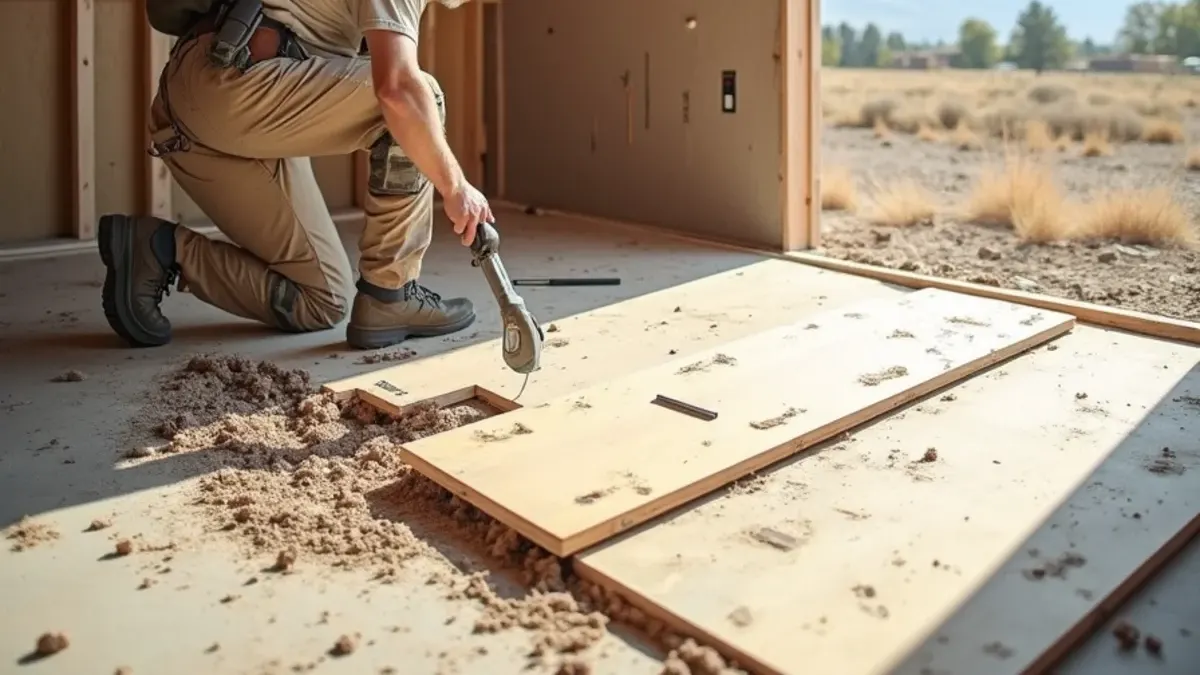
We remove the ruined flooring and any contaminated padding or underlayment and haul it off, exposing the subfloor completely.
- 3
Subfloor drying and metering
With the subfloor open, we dry it and meter until it reaches a stable moisture content, verifying it rather than assuming it's dry.
- 4
Structural repair
Rotted, swollen or delaminated subfloor sections are cut out and replaced, and framing below pooled water is checked and addressed.
- 5
New floor selection
We help you choose a floor suited to a space that flooded — commonly engineered hardwood or waterproof LVP — balancing look, budget and risk.
- 6
Installation and final documentation
We install the new floor to spec and hand over moisture records and photos your insurer can use to close the claim.
Questions about flood-damaged replacement?
Free, written estimates across East Idaho.
A look at the work
Representative scenes
Illustrative images of this kind of work in East Idaho homes.




Cost
What flood-damage replacement costs, and why it's hard to quote up front
Flood replacement is priced by the scope the water created, and that's rarely clear until tear-out. The square footage affected is the baseline, but the subfloor is the swing factor: a subfloor that dries and tests sound needs only the new floor on top, while one that's rotted or swollen must be partly rebuilt, and framing repairs add more. Drying time and equipment count, since a saturated subfloor can take days with the floor open. Your new flooring choice sets a big part of the number — waterproof LVP, engineered hardwood and solid wood span a wide range per square foot. Tear-out and disposal, especially of contaminated category-three materials, is its own line. Transitions, trim and matching into adjoining undamaged rooms factor in too. Because so much is hidden until we open things up, we document and estimate after assessment and keep you and your adjuster updated as drying reveals the full picture. Much of this is typically covered by homeowners insurance — call (844) 954-6342 and we'll document from the first photo.
Local rules & licensing
Permits, registration and your project
Replacing flooring and damaged subfloor sections usually doesn't need a building permit on its own, since it restores rather than alters the structure. A job of $2,000 or more means the contractor must carry a state registration, obtained through the Idaho Contractors Board, which sits under the Idaho Division of Occupational and Professional Licenses. That is a registration, not a competency license. A flood tied to plumbing, or one that requires structural framing repair or electrical work in a finished basement, may require permits for those portions from the City of Idaho Falls or your county building department. When you're filing an insurance claim, document everything before tear-out begins. We'll support that; always confirm current permit requirements with the city or county when structural or mechanical work is involved.
Why Wood Flooring Idaho
Honest, on-time, done right
A flood rebuild lives or dies on the subfloor drying properly, and that takes patience and a meter, not guesswork. Owner Tyler Moore has worked East Idaho floors since 2007 — more than twenty years in the trade, formerly Moore Construction LLC. We verify the subfloor has reached a stable moisture content before a new floor goes down, so you're not regrowing mold in a year. We document moisture readings and photos throughout, giving you a written, itemized scope your insurer can work from. Calls are answered or returned within one business hour, and we aim to reach our core towns within two business days for assessment. Our Google record is a 5.0-star average across 65 reviews.
Reviews
What neighbors say
“Tyler and his team did an amazing job. We had a flood and were very worried our hardwood floor would never look good again. Enter Wood Flooring Idaho and our floors look amazing! Tyler was great at explaining the process, best practices, and letting us know what was possible and what was not. Great company, great work and great people!”
Response from Tyler Moore
Thank you John. It was an honor to work for you and your wife.
Service area
Flood-Damaged Replacement across East Idaho
We bring this work to Idaho Falls and the communities around it.
FAQ
Flood-Damaged Replacement questions
Does homeowners insurance pay for flood-damaged floors?
Often, but it depends on the cause. Sudden, accidental water — a burst pipe, a failed supply line, an overflow — is typically covered by a standard homeowners policy. Water that rises from outside, like river or groundwater flooding, usually is not; that requires separate flood insurance. Gradual leaks from long-deferred maintenance are commonly excluded too. We document the damage and our moisture readings from the start so you have what you need, but your policy and adjuster decide coverage.
Do you work with my insurance adjuster?
Yes. We document the damage with photos and moisture readings before and during the work, provide a written, itemized scope, and keep records as drying reveals the full extent. That gives your adjuster the detail they need to process the claim. We can't negotiate or decide coverage on your behalf — that's between you and your insurer — but we make the floor side of the claim as clear and well-documented as possible so nothing stalls for lack of information.
How long does a flooded subfloor take to dry?
It varies with how saturated it is, the material, and conditions, but figure several days to over a week with the subfloor fully exposed and drying equipment running. Plywood and OSB hold water longer than they look, especially under where the flooring sat. We don't work to the calendar — we meter the subfloor until it reaches a stable moisture content and only then install over it. Rushing this step is the single biggest cause of mold and a repeated job.
Can the same flooring be reinstalled after a flood?
Rarely the original boards — once solid wood has buckled, split or delaminated from a flood, it can't go back down. We can usually match the same species, width and look in new material so the replacement blends with adjoining rooms. But for a space that flooded once and could again, we'll often suggest engineered hardwood or waterproof LVP instead, which handle moisture far better. We'll walk you through matching versus upgrading before you decide.
Ready for flood-damaged replacement in Idaho Falls?
Call for a free, written estimate — we serve Idaho Falls and East Idaho.
- 5.0★ from 65 Google reviews
- 20+ years in East Idaho
- Free written estimates
- Dust-contained sanding
- Moisture tested before install
Wood Flooring Idaho · Idaho Falls, ID 83401 · (844) 954-6342