
Does Homeowners Insurance Cover Water-Damaged Hardwood in Idaho?
Sudden-and-accidental vs. gradual damage, what adjusters look for, and how to document a hardwood claim in Idaho.
- 5.0★ from 65 Google reviews
- 20+ years in East Idaho
- Free written estimates
- Dust-contained sanding
- Moisture tested before install
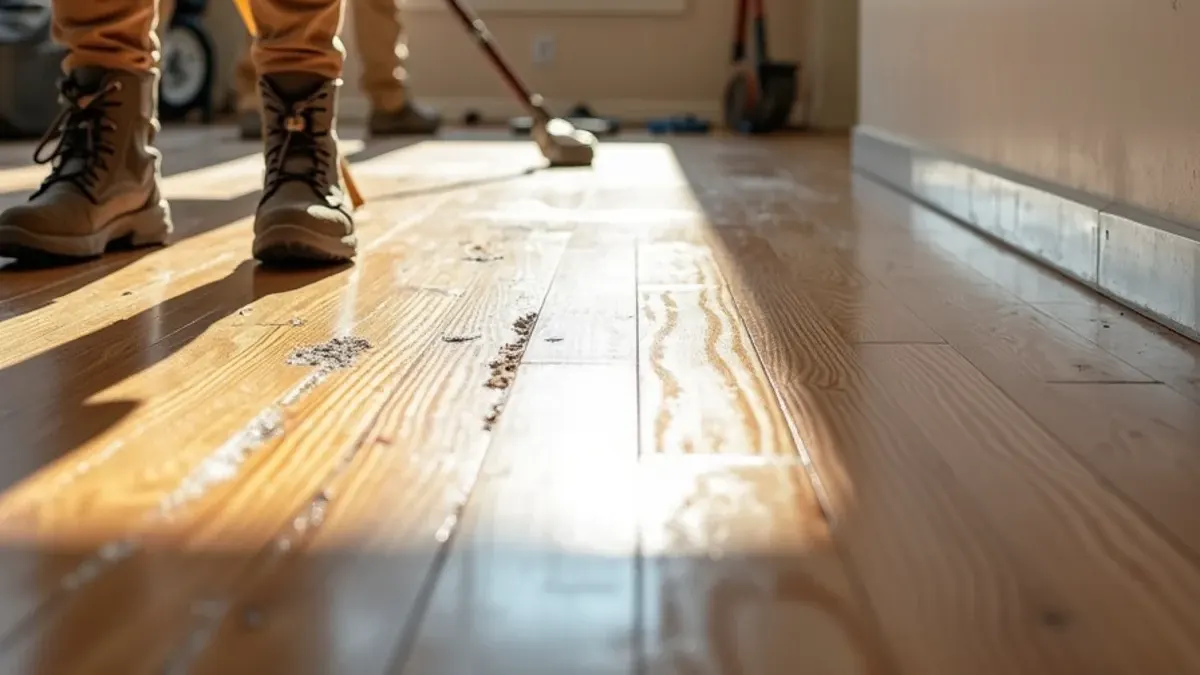
Sometimes. Most Idaho homeowners policies cover hardwood ruined by sudden, accidental water, such as a burst pipe or an overflowing appliance. They usually exclude slow leaks you ignored, flood from outside, and long-term seepage. Coverage turns on the cause and your proof, so photograph everything, report fast, and keep a clear timeline.
Sudden-and-accidental versus gradual: the line that decides your claim
Almost every hardwood water claim in Idaho rises or falls on one question: was the damage sudden and accidental, or gradual? Insurers write policies to cover the surprise, not the slow problem a homeowner could have caught and fixed earlier.
A supply line that bursts while you are at work is sudden. A dishwasher hose that fails and floods the kitchen is sudden. A drip under the sink that stained and cupped the floor over two years is gradual, and that is the one adjusters tend to deny.
We are not insurance adjusters, and none of this replaces reading your own policy. But we have stood in a lot of kitchens with homeowners and their adjusters, and the cause of loss is almost always what the conversation comes down to.
Want a straight answer for your floor?
Free, written estimates across East Idaho.
What a standard Idaho policy usually covers
- A pipe or supply line that bursts suddenly inside the home.
- An appliance that overflows or fails without warning, like a washer, dishwasher, or water heater.
- Water from putting out a fire, which rides along with the fire claim.
- An overflowing tub or sink from a genuine accident rather than long neglect.
- Sudden roof damage from a storm that lets water reach the floor below.
What a standard policy usually excludes
- Gradual leaks and seepage that happened slowly over weeks, months, or years.
- Flooding from outside the home, such as rising water or runoff, which needs separate flood coverage.
- Damage blamed on deferred maintenance or a known problem left unrepaired.
- Sewer or drain backup, unless you carry a specific backup endorsement.
- Ground and surface water that works up through a slab or foundation.
How to document a hardwood water claim
- Photograph and video the source, the standing water, and the spread before you clean anything up.
- Note the date and time you discovered it and, if you can, when it likely began.
- Save the failed part, like a burst hose or cracked valve, as physical evidence of a sudden event.
- Keep receipts for emergency drying, fans, and any mitigation you pay for out of pocket.
- Report the claim quickly; most policies require prompt notice and reasonable steps to limit further damage.
- Get a written assessment from a flooring pro describing the cause, the moisture readings, and the scope of repair or replacement.
Where adjusters and contractors see it differently
Here is the honest friction in these claims. An adjuster is often looking for a reason the loss is gradual or excluded, because that lowers the payout. A good flooring contractor is reading the wood and the moisture to describe what actually happened and what it will take to make it right.
Those two views can collide on scope. An insurer may want to dry and refinish a floor to save money, while the wood tells us the subfloor stayed wet and the boards need to come out. We put our reasoning in writing, with readings, so you are not caught between two opinions with nothing to point to.
We will also tell you when the insurer is right. If a floor can be dried and refinished rather than replaced, that is the honest call, and it usually gets you back to normal faster. Our job is to describe the damage accurately, not to inflate it.
What a contractor's written assessment should include
A written assessment from a flooring pro is one of the strongest pieces of a hardwood water claim. It puts what happened into the terms an adjuster works in: cause, scope, and the readings behind both. A vague one-line estimate rarely carries that weight.
The centerpiece is the cause of loss, stated plainly. An adjuster is deciding whether the damage was sudden or gradual, so a report that names a burst supply line and backs it with fresh readings gives the claim solid footing. Round numbers and guesses invite a denial.
Moisture readings belong in writing, with the date taken. Numbers from the boards and the subfloor show how wet the floor really is and whether it is drying or holding water. They also set a baseline if the insurer later disputes the scope.
Honesty about scope protects your credibility. If a floor can be dried and refinished, the assessment should say so, because inflating damage can sink a claim once the adjuster catches it. The aim is an accurate picture both sides can trust, not the largest possible figure.
The matching problem deserves its own line. When only part of a floor is damaged, a patched repair may never blend with the rest, and that affects whether the insurer pays to redo a larger area. Raising it in writing early heads off a fight at the end.
Finally, a line-item scope lets the insurer see exactly what the repair covers, room by room, with photos attached. That is how we write our assessments, so your claim rests on documentation rather than argument.
Flood versus homeowners coverage in Bonneville County
This trips up a lot of homeowners. A burst pipe inside the house is a homeowners claim. Water that rises from outside and comes in is a flood, and standard homeowners policies across Bonneville County exclude it. Flood damage needs a separate flood policy, often through the federal program.
If your floor was lost to outside water and you have no flood coverage, the repair may come out of pocket. In that case our flood-damage floor replacement work focuses on getting the subfloor dry and sound first, then rebuilding to a budget you set. Either way, we document the cause clearly so you know which kind of claim you have.
FAQ
Quick questions
Does homeowners insurance cover water-damaged hardwood floors in Idaho?
Often, if the water was sudden and accidental, like a burst pipe or a failed appliance. Most Idaho policies will then pay to repair or replace the flooring. Gradual leaks, outside flooding, and neglected maintenance are typically excluded. The cause of loss decides it, which is exactly why fast reporting and clear photos of the source matter so much.
What if the adjuster says the damage was gradual?
Ask what evidence that conclusion rests on, then counter with your own timeline and a contractor's written assessment. Photos of a clearly failed part, a documented discovery date, and moisture readings all support a sudden-event claim. You can also request a reinspection or involve a public adjuster. A denial is a position, not always the final word.
Will insurance pay to replace my whole floor or just the wet part?
It depends on your policy and on matching. Some insurers pay only for the damaged area, which can leave you with a patch that will not match the rest. Others include reasonable matching when a seamless repair is impossible. Get the matching question answered in writing early, because it changes the scope and the cost a great deal.
Should I start drying before the adjuster arrives?
Yes. Most policies require you to take reasonable steps to prevent further damage, so stopping the source and drying the floor actually protects your claim. Just document everything thoroughly first with photos and video, and keep receipts for any mitigation. Waiting days for an adjuster while the floor sits wet can turn a repairable floor into a full replacement.
Can I get the insurer to pay for a contractor's assessment?
Sometimes the cost folds into the claim, and sometimes it is yours to cover up front. Either way, a clear written assessment usually pays for itself by supporting a more accurate payout and by preventing a lowball scope. Ask your adjuster how they handle professional assessments, and keep the receipt in case it is reimbursable under your policy.
The bottom line
Whether your policy pays comes down to cause and proof, so act fast and write everything down. If you need a clear, documented assessment of water-damaged hardwood anywhere in Bonneville County, our team will put the readings and scope in writing for your claim. Reach us at (844) 954-6342.
Floors on your mind?
Call for a free, written estimate across Idaho Falls and East Idaho.
- 5.0★ from 65 Google reviews
- 20+ years in East Idaho
- Free written estimates
- Dust-contained sanding
- Moisture tested before install
Wood Flooring Idaho · Idaho Falls, ID 83401 · (844) 954-6342