
How Pros Match New Hardwood to an Existing Floor
Species, grain, board width and stain all have to line up. Here's the lacing-in method that hides the join.
- 5.0★ from 65 Google reviews
- 20+ years in East Idaho
- Free written estimates
- Dust-contained sanding
- Moisture tested before install
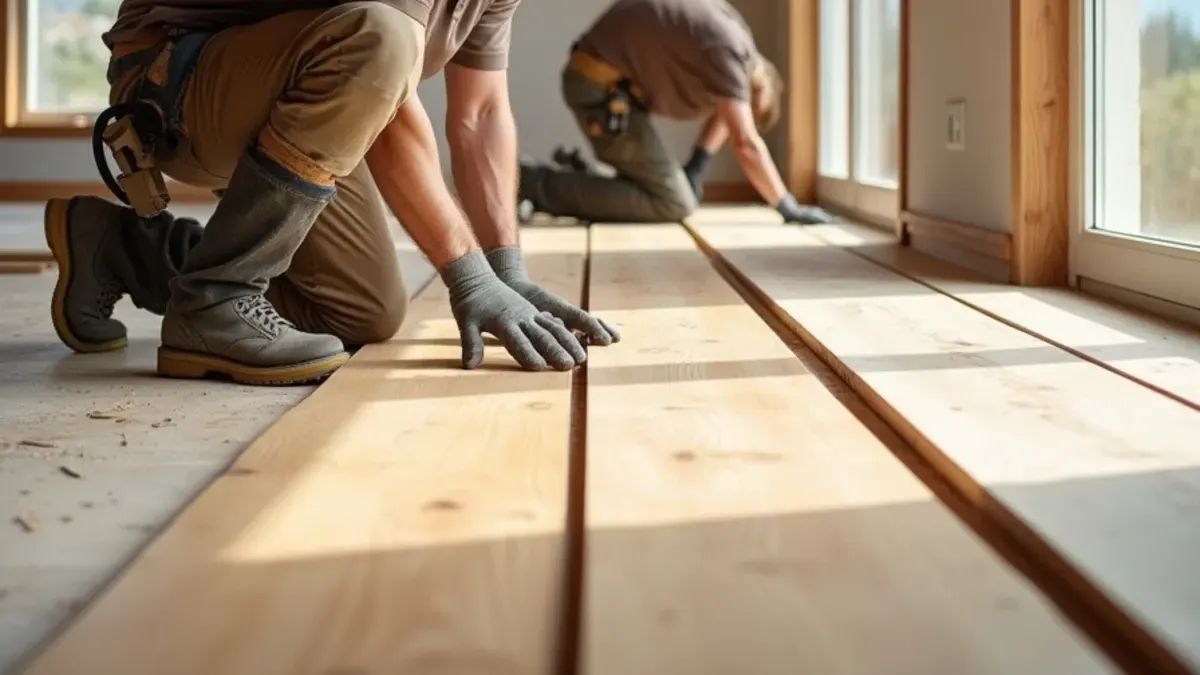
A seamless match lines up four things: species, board width, grain pattern, and finish color. New wood also has to be laced into the old field so the joints stagger instead of forming a line. Then the whole floor is sanded and finished together, which is what truly blends the old and the new into one.
The four things that have to match
- Species: oak matches oak, maple matches maple; mixing species leaves grain and color that never quite agree.
- Board width: old floors are often narrower than today's standard planks, so the new wood may need to be milled or sourced to width.
- Grain pattern: plainsawn, riftsawn, and quartersawn boards show different figure, and they have to line up.
- Finish color: the new wood must be stained and coated to meet the tone of the existing floor.
Want a straight answer for your floor?
Free, written estimates across East Idaho.
Why age is the hardest part to match
Here is what trips up most do-it-yourself matches. Wood changes color as it ages. Oak ambers, cherry deepens, and years of sunlight shift the tone of a floor well beyond whatever stain was first applied. So brand-new boards of the exact same species rarely match an old floor straight off the pallet.
This is why you cannot buy a box of matching flooring and expect it to blend. The new wood has not oxidized or caught any sun, so it reads lighter and fresher next to decades-old boards. Matching is less about finding identical wood and more about finishing new wood to look like it has been there all along.
It is also why the best matches sand the whole floor, not just the repair. Taking the old and new wood down to raw together, then finishing them as one, erases most of the age gap. A patch finished on its own almost always stands out.
Lacing in: how the seam disappears
- Remove the damaged boards cleanly, protecting the tongue-and-groove edges of the surrounding field.
- Cut and fit new boards of the matching species and width into the opening.
- Stagger the end joints into the existing rows, weaving the new wood in rather than ending it on a straight line.
- Blind-nail or fasten the new boards to sit flush and tight with the old field.
- Sand the entire floor, new and old together, to a single flat plane with no ridge at the repair.
- Stain to match, then apply finish coats across the whole floor so sheen and color are uniform.
Stain matching is a test, not a guess
Matching color is where experience shows, and it is never a single pour from a can. Wood takes stain differently depending on grain, age, and how it was sanded, so the same stain can land lighter or darker on new boards than on old. We mix and test on offcuts of the actual new wood before touching the floor.
The honest trade-off is time versus accuracy. Custom stain matching adds a step and a wait while samples dry and get checked in daylight, not under a work lamp. But skipping it to save an afternoon is how you end up with a repair that is a shade off forever. We would rather test twice than live with a mismatch.
Even with careful matching, color is judged dry and in natural light, because a wet or freshly coated sample lies. We check samples at the time of day the room gets the most sun, since that is when a mismatch would show the most.
Sourcing the right boards
Half of a good match happens before any sanding, at the sourcing stage. Finding boards that share the species, width, and cut of an old floor is often harder than the carpentry, especially on floors milled decades ago.
Older homes frequently use board widths that are no longer standard. When that is the case, we look to reclaimed or salvaged stock of the right era, or we have new boards milled to the old width and profile so they drop into the existing field.
Custom milling solves a lot of mismatches. A shop can match plank width, thickness, and the tongue-and-groove profile, so the new wood seats properly against the old. It costs more and takes longer than grabbing stock flooring, but it is how a seam truly disappears.
Species and cut both have to line up. Plainsawn, riftsawn, and quartersawn boards of the same species show different grain, so matching oak to oak is not enough; the cut has to agree too, or the figure gives the repair away.
If you still have leftover boards from the original installation, save them. A box of the actual flooring, aged in the same house, is the best match money cannot buy, and we can often work it into a repair for a seam no one will find.
Be realistic about timelines. Sourcing or milling the right boards can add days or weeks to a repair, and sometimes a perfect-width match is simply unavailable. We will tell you up front what is sourceable, what has to be milled, and where a transition may be the honest answer.
When a perfect match is not realistic
Sometimes the honest answer is that a flawless match is not in the cards, and we will tell you up front. Discontinued board widths, a species that is hard to source, or an existing floor with heavy sun-fading can all put a truly invisible match out of reach without refinishing the whole floor.
In those cases we lay out the real choices. We can get very close and sand the whole floor to blend it, or use a natural break like a doorway or a threshold to transition between old and new in homes around Shelley and across the valley. Our hardwood floor matching and repair work is about the most honest result for your floor, not a promise we cannot keep.
FAQ
Quick questions
Can you match new hardwood to my old floor without refinishing the whole thing?
Sometimes, but the match is rarely invisible that way, because new wood has not aged or caught sun like the old boards. The best results lace the new wood in, then sand and finish the entire floor together so color and sheen are uniform. If you only want to refinish the repair area, expect the patch to be close rather than seamless.
Why does brand-new wood of the same species not match?
Because wood changes color as it ages and sees sunlight. Oak ambers, cherry deepens, and the original stain shifts over the years, so fresh boards read lighter and newer next to an old floor. Matching means finishing the new wood to look aged, and usually sanding the whole floor together, rather than expecting identical boards to blend on their own.
What is lacing in?
Lacing in is weaving new boards into an existing floor so the end joints stagger into the surrounding rows instead of stopping on a straight line. A straight seam advertises a repair; a staggered, laced joint disappears once the floor is sanded and finished together. It is the standard way to make a board replacement vanish into the field around it.
How do you match the stain color?
By testing, not guessing. We mix stain and try it on offcuts of the actual new wood, then judge the samples dry and in natural light, because grain and age make the same stain land differently on new boards than old. It takes an extra step and a little patience, but it is the only reliable way to avoid a repair that sits a shade off.
What if my floor's board width is no longer made?
That is common on older homes, and there are two good options. We can source reclaimed boards of the right era and width, or have new boards custom-milled to match the width and profile of your floor. Both cost more than stock flooring and take longer to obtain, but they are what let the new wood seat properly and the seam vanish once everything is sanded and finished together.
The bottom line
Matching new hardwood to an old floor is equal parts milling, carpentry, and color work, and the age of the existing wood is the real challenge. Lace the boards in, test the stain, and finish the whole floor as one. For a careful match around Shelley and East Idaho, reach us at (844) 954-6342.
Floors on your mind?
Call for a free, written estimate across Idaho Falls and East Idaho.
- 5.0★ from 65 Google reviews
- 20+ years in East Idaho
- Free written estimates
- Dust-contained sanding
- Moisture tested before install
Wood Flooring Idaho · Idaho Falls, ID 83401 · (844) 954-6342