
Solid vs Engineered Hardwood for Idaho Basements and Slabs
Below grade and over concrete, construction matters more than species. Here's how to choose.
- 5.0★ from 65 Google reviews
- 20+ years in East Idaho
- Free written estimates
- Dust-contained sanding
- Moisture tested before install
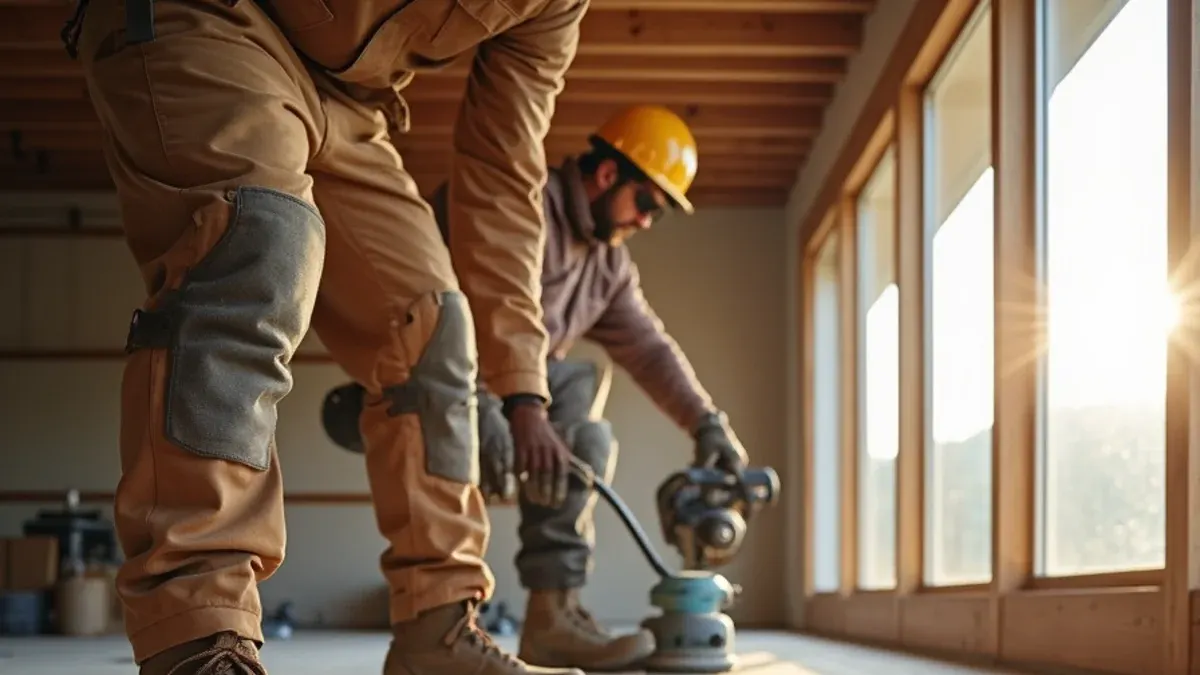
Below grade, construction beats species. Engineered hardwood, with real-wood layers cross-stacked over a plywood core, stays stable over concrete and through humidity swings that would cup solid wood. Solid hardwood is not recommended below grade. For an Idaho basement on a slab, engineered or a floating floor is the safer, longer-lasting build.
Why solid wood struggles below grade
Basements fight wood in two ways, and solid hardwood loses both fights. First, concrete slabs hold and release moisture, and that moisture rises straight into any wood sitting on or near them. Solid boards drink it up, swell, and cup, no matter how good the installation looked on day one.
Second, you cannot nail solid wood to concrete the way you nail it to a wood subfloor. Without that fastening, and without a stable moisture environment, a solid floor below grade has no good way to stay flat. The industry guidance is consistent on this: solid hardwood is for on-grade and above-grade, not below.
This is not a brand or a budget problem. It is physics. A beautiful solid oak floor that would last a lifetime upstairs will cup and gap in a basement, because the environment under the house is working against it the whole time.
Want a straight answer for your floor?
Free, written estimates across East Idaho.
What makes engineered hardwood different
Engineered hardwood is built to beat exactly this problem. A real-wood top layer sits over a core of plywood or similar material, with the grain of each layer cross-stacked at angles. That cross-ply construction fights the natural tendency of wood to swell and shrink in one direction, so the plank stays far more stable.
The surface is still real wood, so it looks and feels like a hardwood floor, not a photo of one. What changes is the behavior underneath. Where a solid board moves with every humidity swing, an engineered board holds its shape, which is what makes it suitable for the basement and slab conditions that defeat solid wood.
The key point for a basement is that this is about how the floor is made, not which tree it came from. You can get oak, hickory, or maple in engineered form. The construction is doing the work, and the species is just the look on top.
Installation methods over a slab
- Floating floor: engineered planks click together and rest over an underlayment, not fastened to the slab, with a vapor barrier below. The most forgiving option for basements.
- Glue-down: engineered planks bonded directly to the slab with the correct adhesive and moisture barrier. Solid underfoot, but the slab must test dry first.
- Over a subfloor: a plywood or sleeper subfloor is built on the slab, which raises the floor and adds a layer between concrete and wood.
- In every method, a moisture barrier and a flat, dry, clean slab come first; skip the prep and even engineered wood can fail.
The moisture test that comes first
Before we recommend any basement floor, we test the slab for moisture, and that reading drives the whole plan. A slab can look bone dry and still release enough vapor to wreck a floor, especially a newer pour that has not fully cured. We would rather wait on a reading than warranty a guess.
The honest trade-off is patience versus risk. A new slab needs time and testing before flooring goes down, and that can mean a delay no one enjoys. But installing over a wet slab is how you buy a floor that cups within a season, and no product survives that. The test is cheap compared to redoing the job.
We also look at drainage, the vapor barrier, and whether the basement has a history of water. A floor is only as good as what is under and around it. If a basement has a moisture problem, the honest move is to fix that first, not to pick a tougher plank and hope.
When solid wood still wins
None of this makes engineered wood the answer for every room. On the main floor and upstairs, over a wood subfloor, solid hardwood is often the better long-term choice. It can be sanded and refinished many times across decades, where a thin engineered wear layer allows only one light sanding or none.
So the smart plan in a lot of Idaho homes is to match the product to the level. Solid wood for the living areas you will refinish and keep for the life of the house, and engineered or floating floors for the basement where stability matters more than sandings. It is not one material winning everywhere; it is the right build for each floor.
Radiant heat, cold slabs, and other below-grade questions
A few questions come up on nearly every basement job, and they all circle back to the same theme: construction and moisture matter more than species.
Radiant heat is the first. Many finished basements use in-floor heat, and engineered hardwood generally handles it far better than solid wood, because its cross-ply core resists the shrinking and gapping that heat cycles cause in solid boards.
If you have radiant heat, follow the flooring maker's temperature limits closely. Running a slab too hot, or ramping it up too fast in our cold months, drives wood movement that no product fully absorbs. Gradual changes keep an engineered floor stable.
Installation method matters over radiant too. A floating engineered floor and a properly glued-down one can both work, but the manufacturer's guidance for radiant systems comes first, because warranties often hinge on it.
Then there is the cold slab itself. Near 4,700 feet, a basement slab stays cool and can feel cold underfoot, and it sweats when warm air meets it in summer. That condensation is a moisture source, which is one more reason solid wood struggles down there and engineered belongs.
Our approach does not change with the question: test the slab, respect the manufacturer's limits, pick the method that fits, and put it in writing. A basement floor built for heat, cold, and slab moisture will outlast one chosen on looks alone.
Choosing for an Idaho basement
For basements around Iona and out toward Bannock County, our climate adds its own wrinkle. Near 4,700 feet, winters are dry and summers turn humid with irrigation, so a below-grade floor already fighting slab moisture also has to ride that seasonal swing. Engineered construction handles both better than solid wood can.
Our engineered hardwood flooring work for basements always starts with the slab moisture reading, then the right method, floating or glue-down, for your conditions. We put the test results and the plan in writing, so you know the floor was built for where it lives, not just sold to fit a budget.
FAQ
Quick questions
Can I install solid hardwood in my basement?
It is not recommended. Concrete slabs release moisture that rises into solid wood and causes cupping, and you cannot nail solid boards to concrete the way you would to a wood subfloor. Industry guidance keeps solid hardwood on-grade and above-grade. For a basement, engineered hardwood or a floating floor gives you a real-wood surface that actually stays flat over the slab.
Is engineered hardwood real wood?
Yes. The top layer is genuine hardwood, so it looks and feels like a solid floor. The difference is the core: layers of plywood cross-stacked at angles to resist swelling and shrinking. That construction is what makes it stable enough for basements and slabs. You can get oak, hickory, or maple in engineered form, so the species look is still yours.
Do I really need a moisture test before flooring my basement?
Yes, and it is the step we never skip. A slab can look dry and still release enough vapor to cup a floor, especially a newer pour. The moisture reading decides the installation method, the barrier, and whether the slab needs more time first. Skipping it to save a few days is how a basement floor fails within its first season.
Can engineered hardwood be refinished later?
Sometimes once, lightly, depending on how thick the real-wood top layer is. Thinner engineered products cannot be sanded at all without exposing the core. This is the trade-off against solid wood, which can be refinished many times. For a basement it is usually the right compromise, because stability over the slab matters more there than the number of future sandings.
Can I put engineered hardwood over basement radiant heat?
Usually yes, and engineered handles radiant heat better than solid wood, because its cross-ply core resists the gapping that heat cycles cause. The keys are following the manufacturer's temperature limits, raising the slab temperature gradually in cold months, and using an approved installation method. Solid wood over radiant below grade is risky on both the heat and the slab-moisture fronts, so engineered is the safer build.
The bottom line
In a basement, how the floor is built matters more than which tree it came from, and engineered construction is what stays flat over a slab. Test the slab, choose the method, and match the product to the level of your home. For basement flooring around Iona and Bannock County, dial (844) 954-6342.
Related
Floors on your mind?
Call for a free, written estimate across Idaho Falls and East Idaho.
- 5.0★ from 65 Google reviews
- 20+ years in East Idaho
- Free written estimates
- Dust-contained sanding
- Moisture tested before install
Wood Flooring Idaho · Idaho Falls, ID 83401 · (844) 954-6342