
Water Under Your Hardwood? What to Do in the First 24 Hours
The moves that decide whether a soaked hardwood floor is saved or lost — and the ones that make it worse.
- 5.0★ from 65 Google reviews
- 20+ years in East Idaho
- Free written estimates
- Dust-contained sanding
- Moisture tested before install
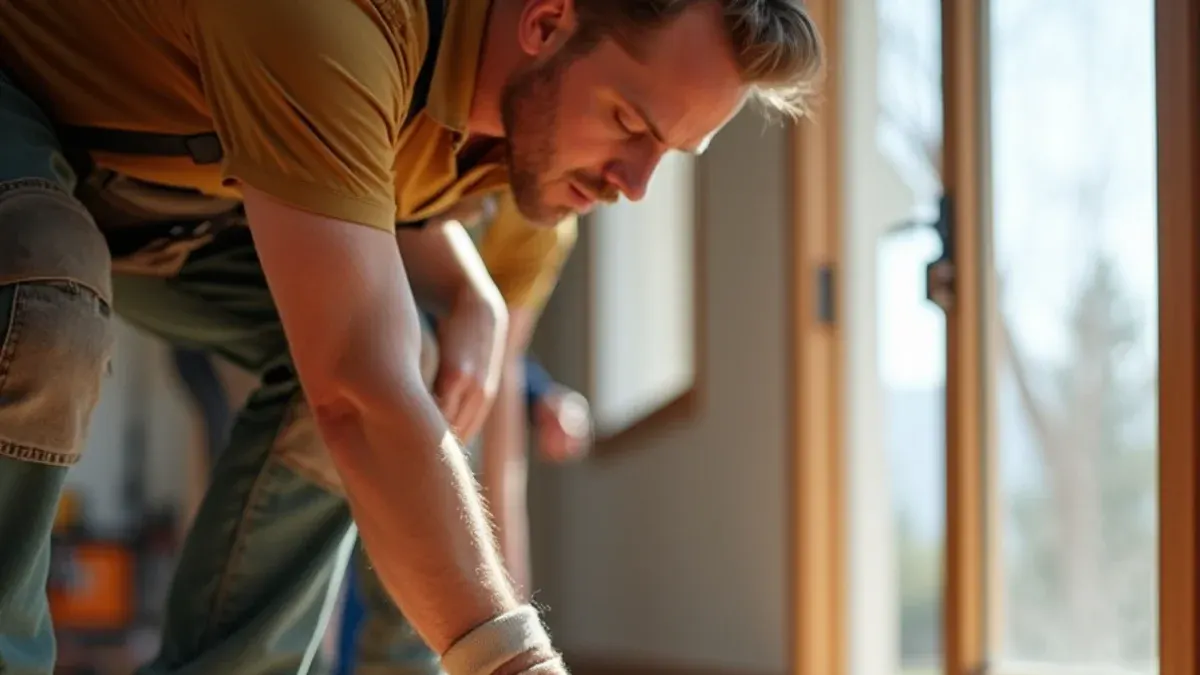
If you find water under hardwood, move fast. Stop the source, lift standing water, pull wet rugs and furniture off the boards, and get air moving. The first day decides whether the wood dries flat or warps for good. Put a moisture meter on it before you assume the floor is fine.
What is actually happening under the boards?
Hardwood is a sponge with grain. When water reaches the underside of a board, the raw bottom pulls moisture in faster than the sealed, finished top can release it. That imbalance is what warps a floor. The water you see pooled on the surface is rarely the real problem.
In most Idaho Falls homes the subfloor is plywood or OSB laid over a crawlspace or basement. Once that layer soaks, it keeps feeding moisture back up into the hardwood for days. The clock that matters started when water first touched the wood, not when you noticed the wet patch.
That is why speed beats everything else on day one. A floor you dry out quickly often relaxes back to flat. A floor left sitting in trapped moisture cups, crowns, or buckles, and those shapes get harder to reverse the longer they set.
Want a straight answer for your floor?
Free, written estimates across East Idaho.
Your first 24 hours, step by step
- Stop the source. Shut the supply valve, switch off the appliance, or cap the leak before you touch the floor itself.
- Kill power to the area if water is near outlets or cords, then unplug whatever you can reach safely.
- Remove standing water with a wet vacuum or towels. On the first pass, speed matters more than getting every drop.
- Pull up rugs, lift furniture off the wet zone, and slide foil or wood blocks under legs so metal and stain do not transfer.
- Open the floor to moving air. Run fans across the surface and aim a dehumidifier at the room; crack windows only if the outside air is drier than inside.
- Photograph and video everything while it is still wet, including the source, the spread, and any soaked baseboards.
- Call a flooring pro to meter the boards and subfloor. A surface that wipes dry can still hide a soaked underside.
What not to do while the floor is wet
- Do not crank the furnace to bake it dry. Fast, uneven heat splits boards and checks the finish.
- Do not sand or refinish anything yet. Wet wood will not hold a finish and will move again as it dries.
- Do not lay plastic sheeting over the floor, which traps the very moisture you are trying to drive out.
- Do not trust a top surface that looks dry; the damage lives underneath where you cannot see it.
- Do not discard damaged material before it is photographed and logged for a claim.
How we read the damage before deciding anything
The honest truth is that nobody can tell you on day one whether a wet floor is saved. We take moisture readings across the boards and down into the subfloor, then track them over several days of drying. A floor trending back toward its normal moisture content has a real chance.
We are straight about the trade-offs. Drying in place is cheaper and keeps your original wood, but it is slower and a little cupping can stay. Lifting select boards dries the cavity faster and more completely, yet it costs more and means patching or lacing in new pieces later.
What we will not do is promise a result before the readings come back. A floor that mops up clean can still fail a week later if the subfloor stayed damp. Patience with the meter beats a rushed guess, and it is cheaper than redoing the job twice.
Who should you call first?
In the scramble of a wet floor, the order of your calls matters nearly as much as the drying. Shut the source yourself or call a plumber first, because nothing downstream helps while water keeps arriving. Stopping the flow is always the opening move.
Next, open a claim with your insurer if the damage is more than a quick wipe-up. Early notice protects your coverage, and the photos you take in the first hour are the ones an adjuster trusts most. Keep any failed part, like a split hose, as proof the event was sudden.
Then bring in a flooring pro to meter the wood while the problem is fresh. We often work right alongside the plumber and the adjuster, and the earlier we read the boards, the clearer everyone's picture becomes.
Resist finishing one call before starting the next. The plumber can work while your fans run and while you photograph the spread, so let the tasks overlap. Water damage rewards people who push on several fronts at once.
When you reach each person, be specific. Tell the plumber where the water is coming from, tell the insurer when you found it and what it touched, and tell us how long the floor sat wet and what the source was.
Do not assume a weekend or an evening means waiting until Monday. We return calls within one business hour, and the first hours are exactly when a wet floor is most savable. A fast reading now keeps the most options open later.
When to call for water-damaged floor repair
If the water came from a clean source and you caught it within hours, aggressive drying may be all your floor needs. Call for help when the water crossed into several rooms, ran down into a crawlspace out toward Lincoln, or sat overnight before anyone found it.
We cover Idaho Falls and the smaller towns around it, and we return calls within one business hour. The sooner a meter touches the wood, the more options you keep. Our water-damaged wood floor repair starts with that reading and a written plan, never a guess about what you cannot see.
FAQ
Quick questions
How long before water permanently damages a hardwood floor?
There is no fixed deadline, but damage begins within hours and gets harder to reverse each day the wood stays wet. Boards dried within the first day or two often flatten back out on their own. Water left a week, especially with a soaked subfloor beneath it, usually causes cupping or buckling that only sanding or replacement will fix.
Should I pull up the boards myself to dry the subfloor?
Usually not. Prying boards up risks splitting wood you could have saved and wrecking the tongue-and-groove edges needed to relay them. If the subfloor is badly soaked, a pro can lift select boards cleanly and dry the cavity with equipment. Let the moisture readings, not panic, decide whether any boards come up.
Will my floor cup even if I dry it fast?
Some mild cupping is common even with a quick response, because the underside of each board drinks water before the top can. The good news is that light cupping often relaxes as the wood settles back to its normal moisture level over a few weeks. If it stays, a sanding once the floor is fully dry usually flattens it.
My floor dried and looks fine. Am I in the clear?
Not necessarily. The surface can read dry while the subfloor underneath holds moisture that slowly works back into the wood. Have the boards and subfloor metered before you call it done. Catching a hidden damp spot now is far cheaper than discovering cupping or a mold smell a month later.
Do I need a water mitigation company or a flooring contractor?
Often both, in sequence. A mitigation company specializes in drying the structure fast with commercial equipment, which matters when water spread widely. A flooring contractor reads the wood, decides what is salvageable, and handles the repair or refinish afterward. For a small, caught-early leak, a flooring pro with drying gear may be all you need; for a large soak, drying first and repairing second is the right order.
The bottom line
Water under hardwood is a race, and the first day counts the most. Stop the source, dry hard, document everything, and get a moisture meter on the wood before you decide its fate. For fast help across Idaho Falls and the nearby towns, phone (844) 954-6342.
Floors on your mind?
Call for a free, written estimate across Idaho Falls and East Idaho.
- 5.0★ from 65 Google reviews
- 20+ years in East Idaho
- Free written estimates
- Dust-contained sanding
- Moisture tested before install
Wood Flooring Idaho · Idaho Falls, ID 83401 · (844) 954-6342