
Why Is My Hardwood Floor Cupping? Causes and Fixes in East Idaho
Cupping is a moisture message, not a sanding problem. Here's how to read it and what actually fixes it.
- 5.0★ from 65 Google reviews
- 20+ years in East Idaho
- Free written estimates
- Dust-contained sanding
- Moisture tested before install
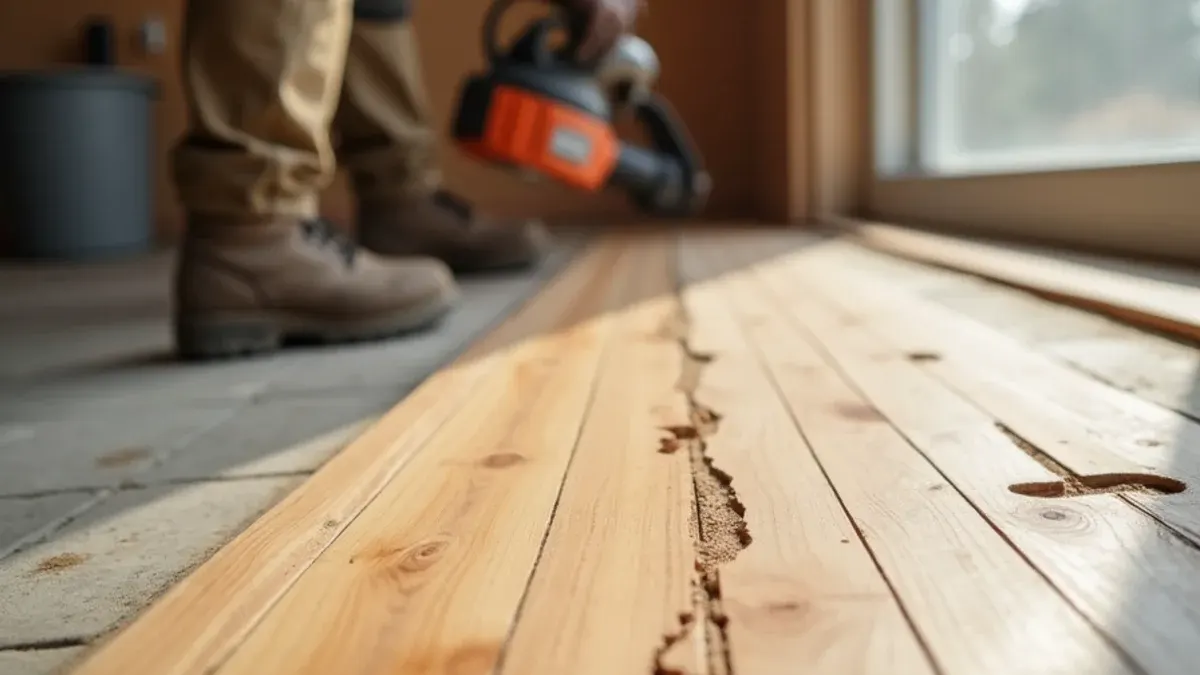
Cupping, where board edges rise higher than their centers, is almost always a moisture problem rather than a finish failure. The underside of your hardwood is wetter than the top, so it swells and curls. Find and fix the moisture source first. Sanding a floor that is still wet only guarantees you sand it twice.
What cupping is, and how it differs from crowning
Cupping shows up as a washboard look across the floor. Each board dips in the center and lifts along both edges, so light catches the ridges and the seams feel raised underfoot. It happens when the bottom of a board holds more moisture than the finished top, and the swollen underside pushes the edges up.
Crowning is the opposite shape, with the center of each board higher than the edges. It often appears after a cupped floor is sanded flat too soon, then dries and reverses. That is why the sequence matters so much: shape first, moisture second, sanding last.
Both are moisture stories told in wood. Reading which one you have tells us where the water is and whether the floor is still moving or has settled. A floor that is actively changing shape is not ready for any repair yet.
Want a straight answer for your floor?
Free, written estimates across East Idaho.
Why East Idaho floors cup in the first place
- A plumbing or appliance leak feeding water into the subfloor under the boards.
- A wet or unventilated crawlspace pushing humidity up through the floor from below.
- A new concrete slab or fresh subfloor that was not dry before the wood went down.
- Wood installed without acclimating to the home, so it swells after the fact.
- Seasonal swing, the East Idaho special: dry furnace winters near 4,700 feet shrink boards, then humid irrigation-season summers swell them back.
- A finish or vapor barrier that traps moisture against the underside of the wood.
How to track down the moisture source
- Look directly above and below the worst cupping for a leak, a damp crawlspace, or a basement wall that weeps.
- Check appliances and supply lines near the floor, including the fridge, dishwasher, and water heater.
- Feel whether the cupping eases in summer and worsens in winter, which points to seasonal humidity rather than a leak.
- Have the boards and subfloor metered; a reading tells you how wet the wood is and whether it is drying.
- Fix the source and let the floor stabilize before anyone talks about sanding.
Why you cannot just sand it flat
This is the mistake we get called to repair most. A cupped floor is sanded flat while it is still damp, it looks perfect for a month, then the wood finishes drying and the boards crown. Now the center of every board sits proud, and the floor needs sanding all over again.
The honest trade-off is patience versus speed. Waiting for the wood to return to its normal moisture content can take weeks after the source is fixed, and nobody enjoys living with a wavy floor. But sanding on schedule instead of on readings almost always costs you a second sanding, and every sanding uses up wood you cannot get back.
Mild cupping often relaxes on its own once the moisture is gone. We would rather tell you to wait and recheck than take money to flatten a floor that was going to flatten itself. When cupping is severe or the boards have split, that is a different conversation, and we will say so plainly.
Can you prevent cupping in the first place?
Cupping is largely preventable, because it is a humidity story, and humidity is something you can manage. The goal is to keep the top and bottom of each board at a similar moisture level, so nothing swells out of balance.
Indoor humidity is the first lever. Our winters run dry with the furnace going near 4,700 feet, and that dryness is usually fine for wood. The trouble tends to come from the other direction, so controlling excess moisture matters more than adding any.
Below the floor is where most prevention happens. A damp crawlspace or an unsealed slab feeds moisture up into the boards year-round, so a proper vapor barrier and crawlspace ventilation do more to stop cupping than anything you do on the surface.
Catch leaks fast. A slow drip from a dishwasher, fridge line, or toilet is a classic cause, and the longer it runs, the worse the cupping. A drain pan under a washer or water heater buys you time to notice a problem before the floor shows it.
Prevention also starts at installation. Acclimating the wood to the home and moisture-testing the subfloor before laying a single board keeps a floor from swelling after the fact. We test before every install for exactly this reason.
Set realistic expectations, though. A little seasonal movement is normal in any wood floor here, and chasing a perfectly still floor is not worth it. Prevention is about avoiding the leaks and damp cavities that cause real cupping, not about freezing the wood in place.
Fixing a cupped floor the right way
The repair order never changes: find the moisture, stop it, dry the wood, confirm with a meter, then decide. In homes out toward Menan and Rigby, where a high water table and irrigation can keep crawlspaces damp, that drying step often means addressing ventilation or a vapor barrier before touching the floor itself.
Once readings hold steady at a normal level, we assess what is left. A floor that relaxed back toward flat may only need a light sanding and recoat. One that stayed badly cupped or cracked may need boards replaced and laced in. Our cupped and buckled hardwood repair always starts from the meter, so you are fixing the cause and not just the symptom.
We also talk through what to change so the cupping does not return. That might mean sealing a crawlspace, adding ventilation, or putting a pan under an appliance that leaked. A floor we sand flat will cup again if the moisture source is still there, so the repair and the prevention go together. Skipping that step is how homeowners end up sanding the same floor twice in a few years.
FAQ
Quick questions
Will my cupped floor flatten out on its own?
Often, yes, if the cupping is mild and you remove the moisture source. As the underside of the boards dries back to the same level as the top, the edges settle and the washboard look eases. This can take several weeks. Severe cupping, split boards, or wood that has been wet a long time is less likely to recover fully.
How long should I wait before sanding a cupped floor?
Until the wood proves it is dry and stable, not a set number of days. After the source is fixed, we meter the boards and subfloor and wait for the readings to hold steady at a normal level, often a few weeks. Sanding before then is the surest way to end up with a crowned floor and a second sanding bill.
Does winter cupping in Idaho Falls mean something is broken?
Not always. Our winters are dry with the furnace running, which usually shrinks wood and opens small gaps rather than cupping it. If a floor cups in a dry winter, that points to a moisture source like a leak or a damp crawlspace rather than normal seasonal movement. Cupping that comes with humid summers is more often seasonal.
Can a dehumidifier fix a cupped floor?
It can help, if the cupping comes from excess humidity or a damp space below, by pulling the moisture that is swelling the boards back out. It will not fix cupping caused by an active leak, which needs the source stopped first. Think of a dehumidifier as part of the dry-down, not a standalone cure. Once readings normalize, you can judge whether any sanding is still needed.
The bottom line
Cupping is your floor telling you where the water is, so read the message before you reach for a sander. Fix the source, let the wood dry, and confirm with a meter before any repair. If your East Idaho floor is cupping, call (844) 954-6342 and we will find the cause first.
Floors on your mind?
Call for a free, written estimate across Idaho Falls and East Idaho.
- 5.0★ from 65 Google reviews
- 20+ years in East Idaho
- Free written estimates
- Dust-contained sanding
- Moisture tested before install
Wood Flooring Idaho · Idaho Falls, ID 83401 · (844) 954-6342