
Why Wood Floors Gap in Idaho Falls Winters (and How to Prevent It)
Dry furnace air shrinks wood. Here's which winter gaps close on their own and which mean something's wrong.
- 5.0★ from 65 Google reviews
- 20+ years in East Idaho
- Free written estimates
- Dust-contained sanding
- Moisture tested before install
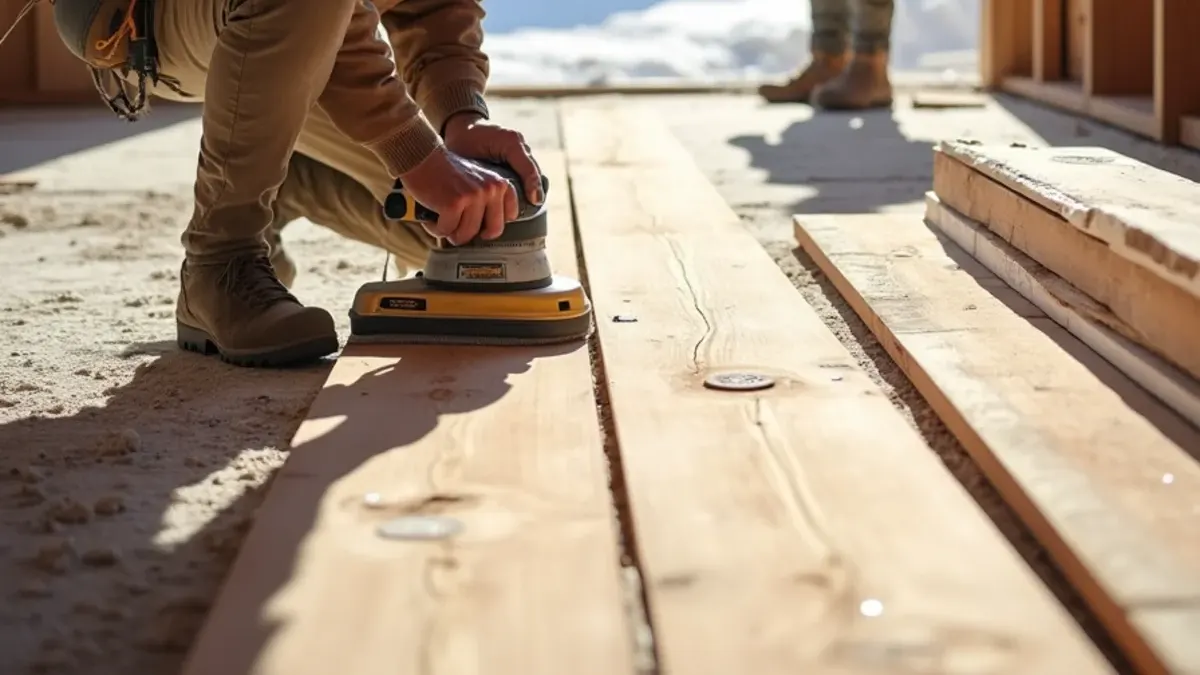
Hardwood gaps every Idaho Falls winter because dry furnace air pulls moisture out of the wood and the boards shrink. Thin seasonal lines that close again by summer are normal. Wide gaps that stay open, or gaps paired with cupping, point to a moisture or installation problem worth checking.
Why do wood floors gap in Idaho Falls winters?
Wood is never truly done moving. It gains and loses moisture with the air around it, swelling when the air is damp and shrinking when it's dry. Idaho Falls sits near 4,700 feet in a high desert, and our winters are cold and bone-dry. Run a furnace in that air for months and indoor humidity can drop into the teens.
At that point the boards give up moisture and shrink across their width. Since each board shrinks a little, the losses add up into thin lines between them. Come spring and summer, irrigation season raises the humidity, the boards take moisture back and swell, and most of those winter gaps close on their own.
This is seasonal, predictable movement, not damage. Oak, maple and hickory all do it. The wider the plank, the more total movement you'll see, which is why a 5-inch board shows bigger gaps than a 2-1/4-inch strip.
How the floor was installed matters too. Solid wood nailed to a wood subfloor moves more than engineered flooring, which is built to resist this swing. And a floor that was acclimated properly, left to reach the home's moisture level before it went down, gaps less than one that was installed straight off the delivery truck. By the time you're noticing winter gaps, though, the install is done, and the lever you still control is the indoor humidity.
Want a straight answer for your floor?
Free, written estimates across East Idaho.
Normal seasonal gaps vs. gaps that signal a problem
The question isn't whether your floor gaps. It's whether the gaps are telling you something. Here's how we read them in Bonneville County homes.
- Normal: thin, even lines, roughly the thickness of a dime or less, spread evenly across the floor, that close up again by midsummer.
- Normal: slightly wider gaps near heat registers or a woodstove, where the air is driest.
- Watch it: gaps wide enough to catch a coin that never close, even in humid months.
- Problem: gaps on one side of a room only, especially near a bathroom, kitchen or exterior wall, which can mean a moisture source.
- Problem: gaps paired with cupping, where board edges lift higher than their centers, which points to moisture from below.
- Problem: a single huge gap in one spot while the rest of the floor is tight, often a sign of a cracked or failed board.
How humidity control keeps boards tight
Since gapping is a humidity story, the fix is a humidity story too. The goal is to keep indoor relative humidity in a steadier range year-round, usually somewhere around 35 to 50 percent, so the wood never swings to either extreme. You can't stop seasonal movement completely, but you can shrink it.
In practice, that means adding moisture in winter and controlling it in summer. A whole-house humidifier on the furnace is the most reliable tool for an Idaho Falls home, because it treats the dry furnace air at the source. Portable room humidifiers help in a pinch but need constant refilling. Keeping the floor out of direct afternoon sun with blinds also reduces local drying.
A hygrometer is the cheap first step. A $15 meter on the wall tells you exactly how dry your house gets in January, and whether your humidity swings are large enough to explain the gaps you're seeing.
Set expectations honestly, though: a humidifier reduces gapping, it doesn't eliminate it. Wood is going to move with the seasons no matter what, and chasing a perfectly gap-free floor in an Idaho Falls winter isn't realistic. The goal is to keep the swing gentle enough that the gaps stay thin and cosmetic rather than wide and permanent. Houses with a woodstove or a lot of south-facing glass run drier and need more help than average.
Should you fill winter gaps?
This is where homeowners most often make it worse. Filling a seasonal gap in January seems logical, but the gap is only there because the wood has shrunk. When summer comes and the boards swell back to size, there's no room left for the filler. The board edges crush against it, and you can end up with permanent cupping or squeaks.
Rope and wood-sliver fills are the traditional trick for a permanently gapped floor, pressing a matching strip of wood into the gap rather than a flexible filler. Done in the right season by someone who understands the floor still has to move, it can tighten up an old floor that's pulled apart for good. Done wrong, in the dry season, it fails the same way as caulk.
So the honest rule: don't fill gaps that close on their own. Leave normal seasonal lines alone. Filling only makes sense for gaps that stay open year-round, and even then it's done in the humid season when the wood is at its fullest, so the filler isn't trapping anything. For wide permanent gaps the better fix is often re-flooring a problem board rather than caulking the whole room.
What a flooring pro checks before recommending a fix
Before we call any gap a problem, we measure. A moisture meter tells us the actual moisture content of the boards and the subfloor, which separates a dry-air gap from a wet-subfloor issue. We check gaps in several rooms, because a floor that gaps everywhere evenly is behaving normally, while a floor that gaps in one zone is pointing at a cause.
We also ask how old the floor is, whether it was acclimated before installation, and what the home's winter humidity runs. A floor installed dry in a dry month, then exposed to summer humidity, behaves differently than one installed without acclimation. The honest answer is sometimes "nothing is wrong, add a humidifier." Other times the measurement points to a leak, a crawlspace issue or boards that need replacing.
Either way, the measurement comes before the recommendation. We'd rather tell you to buy a $200 humidifier than sell you a refinish you don't need.
Timing the inspection matters as well. The best time to judge whether a gap is truly permanent is at the humid end of the year, usually mid to late summer here, when the wood has taken on all the moisture it's going to. A gap that's still wide open in August is a real gap. The same gap measured in February tells you almost nothing, because every floor in Idaho Falls looks its worst in the dead of a dry winter. If you're worried, note the gaps now and look again in summer before deciding on any fix.
FAQ
Quick questions
Will my winter floor gaps close by themselves?
Usually, yes. Thin, even gaps that open in the dry winter months are the wood shrinking, and they typically close again once irrigation season raises the humidity in late spring and summer. If a gap stays wide open through a humid July, that's the sign it's more than normal seasonal movement and worth having checked.
What humidity level should I keep my house at to protect hardwood?
Aim to hold indoor relative humidity in a fairly steady band, roughly 35 to 50 percent, across the year. The exact number matters less than the swing. A floor that bounces from 15 percent in January to 55 percent in July moves a lot. A whole-house humidifier on your furnace is the most reliable way to lift that winter low in Idaho Falls.
Why does only one room in my house have bad gaps?
Even, whole-house gapping is normal dry-air movement. Gapping in a single room, especially near a bathroom, kitchen, exterior wall or crawlspace access, suggests a localized moisture issue rather than furnace dryness. It can also mean that room runs much drier or hotter than the rest of the house. That pattern is worth a moisture check before you assume it's seasonal.
Is it ever worth refinishing a floor just to close gaps?
Rarely for seasonal gaps, since refinishing doesn't change how the wood moves with humidity. It can help for permanent gaps, where a floor is pulled tight, re-laced with new boards where needed, and refinished as one job. But if the gaps come and go with the seasons, a humidifier solves the real problem for a fraction of the cost.
The bottom line
Winter gaps are usually your Idaho Falls floor doing exactly what wood does in dry furnace air, and they often close on their own by summer. If yours stay open, spread unevenly or come with cupping, that's worth a look before you fill anything. Call (844) 954-6342 and we'll measure the moisture before recommending a thing.
Floors on your mind?
Call for a free, written estimate across Idaho Falls and East Idaho.
- 5.0★ from 65 Google reviews
- 20+ years in East Idaho
- Free written estimates
- Dust-contained sanding
- Moisture tested before install
Wood Flooring Idaho · Idaho Falls, ID 83401 · (844) 954-6342