
Refinish or Replace? How to Tell If Your Hardwood Can Be Sanded Again
A floor has only so many sandings in it. Here's how to measure what's left before you commit.
- 5.0★ from 65 Google reviews
- 20+ years in East Idaho
- Free written estimates
- Dust-contained sanding
- Moisture tested before install
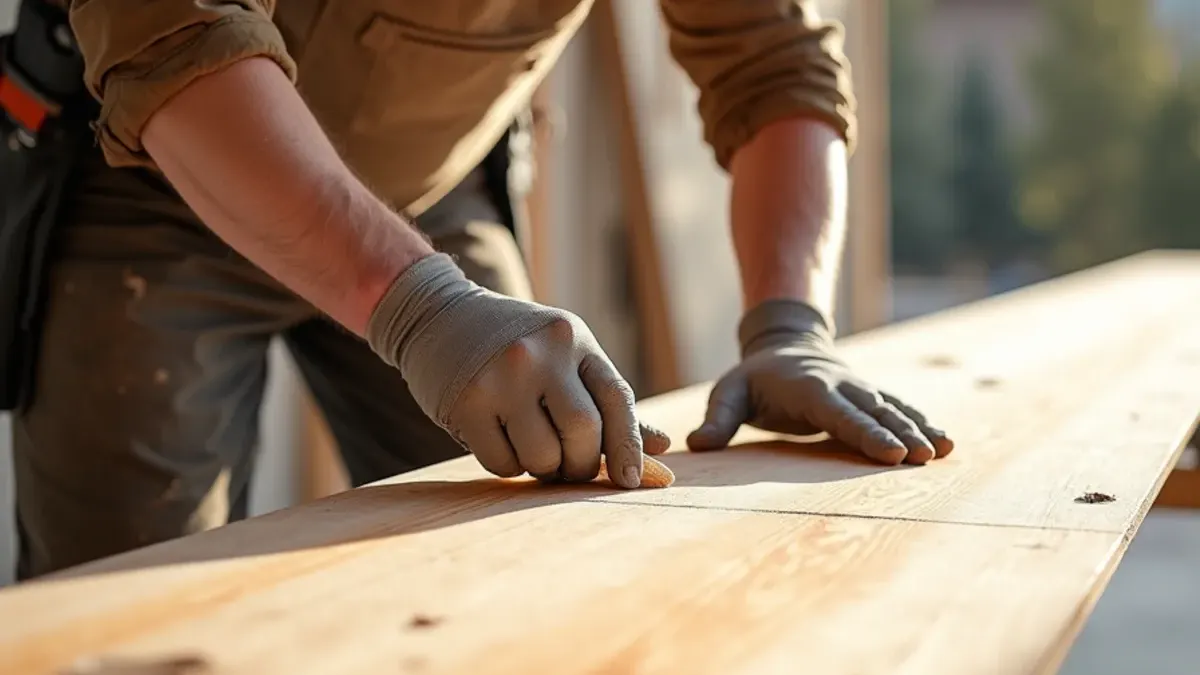
If there is enough wood above the tongue and no structural or widespread water damage, refinish, because it is cheaper and keeps your original floor. Replace when the wear layer is sanded thin, boards are cracked or rotten, or you want a species the floor cannot become. The one measurement that settles it is tongue depth.
The one measurement that settles most of it
Almost every refinish-or-replace decision comes down to how much wood sits above the tongue. Solid hardwood is milled with a tongue on one edge, and only the wood above that tongue can be sanded. Once you reach it, the floor cannot be fully sanded again.
We check this at a floor vent, a doorway, or a threshold where the board edge is exposed. A floor with a healthy wear layer has plenty of refinishes left. One that has already been sanded two or three times in a mid-century home may have almost nothing above the tongue.
This is why we measure before we quote. A homeowner who assumes a tired floor is ready for the dumpster is often sitting on wood that has one or two good sandings left, and refinishing saves them a great deal of money.
Want a straight answer for your floor?
Free, written estimates across East Idaho.
A refinish-or-replace checklist
- Measure wood above the tongue at a vent or threshold; thin means refinishing options are running out.
- Count past sandings if you know the history; each full sanding removes a meaningful slice of wear layer.
- Look for cracked, split, or rotten boards that sanding cannot save.
- Check for cupping, buckling, or lifting that signals a moisture problem under the floor.
- Note any soft or spongy spots, which can mean subfloor or structural damage.
- Decide whether you want a different species or plank width the current floor cannot provide.
- Factor in how long you plan to stay, since refinishing buys years and replacement resets the clock.
How many sandings does a floor have left?
A standard three-quarter-inch solid floor can be fully sanded several times across its life, because each sanding takes only a thin layer. But many older East Idaho floors have already spent some of that budget, and engineered floors have a much thinner wear layer to begin with.
Engineered hardwood is the one to watch. Its real-wood top layer may allow only one light sanding, or none at all on the thinnest products. Sanding through that veneer exposes the plywood core and ruins the plank, so we check the wear-layer thickness before ever putting a machine on an engineered floor.
When the wood above the tongue is thin, a full sanding gets risky, and a lighter screen-and-recoat is often the smarter move. It freshens the finish without cutting into the little wood that remains, and it can postpone the replace decision for years.
When replacement is the honest call
Sometimes refinishing is just throwing good money after a floor that is done, and we would rather tell you that than take the job. Replace when the wear layer is sanded to the tongue, when boards are cracked or rotten through, or when water or subfloor damage runs across whole rooms.
The honest trade-off is sentiment and cost versus a sound result. Refinishing is cheaper and keeps the original wood, which in an older home is often tighter-grained than anything you can buy today. But sanding a floor with nothing left above the tongue, or finishing over a failing subfloor, buys you a short-lived fix and a second bill.
Replacement also wins when you want something the current floor cannot give you, like a wider plank, a different species, or engineered wood for a basement. There is no refinishing your way to a new material. We lay out both numbers so the choice is yours with eyes open.
What a screen-and-recoat buys you
When a floor is tired but structurally fine, a screen-and-recoat often beats a full sanding. The process lightly abrades the existing finish with a buffer, then lays a fresh coat on top, without cutting down into the wood itself.
It fits best on floors with light surface wear and a finish that is dull rather than damaged. It is also the safer choice for a floor that has already been sanded a few times, because it adds no wear to the thin wood above the tongue.
There are things a recoat cannot do. It will not remove deep scratches that reach bare wood, it cannot change the floor's color, and it will not fix gouges, stains, or cupping. Those jobs still need a full sanding or board repair.
The payoff is cost and time. A screen-and-recoat uses far less labor than a full sand-and-finish, and the floor is back in service sooner. It is the kind of maintenance that quietly keeps a floor off the full-refinish schedule.
Done on the right interval, a recoat every several years can postpone a full sanding for a very long time. Each recoat protects the wear layer underneath, which is the part you cannot replace, so the floor has more full refinishes left when it finally needs one.
We decide between a recoat and a full sanding by looking at how deep the wear goes and how much wood remains above the tongue. If the finish is just dull, we recoat; if the damage reaches the wood or you want a new color, we sand. Choosing the lighter option when it will do is how a floor lasts generations.
The in-between option: lace-in and refinish
The decision is not always all-or-nothing. When most of a floor is sound but one area is damaged, we can lace new boards into the field, weaving the joints so no seam line forms, then sand and finish the whole floor together. The repair disappears and you keep most of your original wood.
This is common in Blackfoot and across the valley on floors with a water-stained patch, a wall that was moved, or a stretch of cracked boards. Our hardwood floor refinishing often includes exactly this kind of targeted board replacement, so you are not replacing a whole floor to fix a corner of it.
FAQ
Quick questions
How do I know if my floor can be refinished again?
Check how much wood sits above the tongue at a vent or threshold. If there is a healthy wear layer, the floor has sandings left and refinishing makes sense. If it is already thin from past sandings, a full sanding gets risky and a lighter screen-and-recoat may be safer. We measure this before quoting, because it decides nearly everything.
Can engineered hardwood be refinished?
Sometimes once, lightly, if the real-wood top layer is thick enough. Many engineered products allow only a screen-and-recoat, and the thinnest ones cannot be sanded at all without exposing the core. We check the wear-layer thickness before putting any machine on an engineered floor, because sanding through the veneer destroys the plank and there is no fixing that.
Is it cheaper to refinish or replace?
Refinishing is almost always cheaper when there is enough wood left to sand, because you pay for labor and finish instead of new material plus tear-out and disposal. It also keeps your original floor. Replacement wins when the wood is too thin, damage is widespread, or you want a different species or plank width. Measuring the wear layer tells you which situation you are in.
My floor has one bad spot. Do I have to replace the whole thing?
Usually not. A sound floor with localized damage can often be repaired by lacing new boards into the field and refinishing the whole floor so the patch blends in. You keep most of your original wood and avoid a full replacement. This works best when the surrounding boards are still in good shape and the subfloor beneath is sound.
How is a screen-and-recoat different from refinishing?
A full refinish sands the floor down to raw wood, which removes scratches and lets you change color, but it uses up a slice of the wear layer. A screen-and-recoat only buffs the old finish and adds a fresh coat on top, taking no wood off. Recoating is cheaper, faster, and gentler on a thin floor, but it cannot fix deep damage or change the color.
The bottom line
Before you commit to tearing out a tired floor, measure what is left above the tongue; many floors have more life in them than they look. Refinish when the wood allows it, replace when it does not, and lace in where only part is damaged. For a straight measurement in Blackfoot and nearby, call (844) 954-6342.
Floors on your mind?
Call for a free, written estimate across Idaho Falls and East Idaho.
- 5.0★ from 65 Google reviews
- 20+ years in East Idaho
- Free written estimates
- Dust-contained sanding
- Moisture tested before install
Wood Flooring Idaho · Idaho Falls, ID 83401 · (844) 954-6342